
Tech
GlobeInsightBlog: The Brutally Honest Truth About This Global Trends Platform (2026 Deep Dive)
GlobeInsightBlog is a global trends platform offering data-driven insights, market analysis, and reporting tools. This 2026 review reveals features, pros, cons, and real performance.




I have managed contracts for mid-market and enterprise teams for over six years. I have tested spreadsheets, shared drives, and a dozen dedicated platforms. The difference between doing it right and doing it wrong costs companies real money sometimes millions.
This guide covers everything I have learned about contract lifecycle management. I will walk you through the stages, the tools, the integrations, and the honest tradeoffs. No fluff. No generic advice. Just what actually works.
Table of Contents
- What Is Contract Lifecycle Management (CLM)?
- My Honest First Impressions of CLM Platforms
- Key Features of a Strong CLM System
- How To Get Started with Contract Lifecycle Management Step by Step
- Best Contract Lifecycle Management Software Available in 2025
- How Contract Lifecycle Management Works (Full Process Breakdown)
- Community and Ecosystem Around CLM Tools
- Full Features and Benefits Table
- Pros and Cons of CLM Software
- Safety and Trust in Contract Management
- CLM Software Comparison Table
- Tips and Tricks for Better Contract Management
- Who Is CLM Best For?
- External Resources
- FAQs
- Final Verdict
- What Is Contract Lifecycle Management (CLM)?
- Contract lifecycle management is the automated, end-to-end process of managing a contract from its initial creation through execution, performance monitoring, and eventual renewal or termination.
- Think of it as a structured system that tracks every stage of a contract’s life. It removes the guesswork. It replaces scattered email chains and desktop folders with a single, searchable, automated workflow.
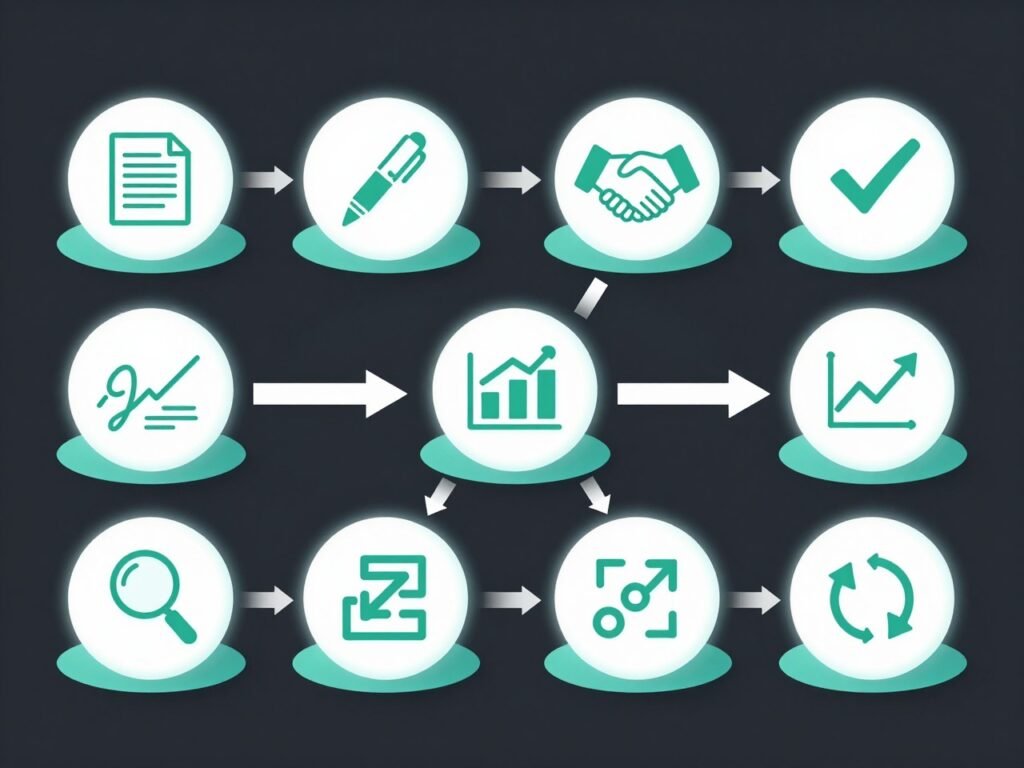
- A proper CLM system covers nine core stages:
- Request — A team submits a contract need with key details
- Authoring — Legal or sales drafts the contract using pre-approved templates
- Negotiation — Both sides review, redline, and counter-offer
- Approval — The contract routes automatically to stakeholders for sign-off
- Execution — All parties sign, usually via e-signature tools like DocuSign
- Performance and Compliance — Teams track deliverables and obligations post-signature
- Auditing and Reporting — Regular checks confirm all terms are being honored
- Amendments — Changes to scope or terms are tracked and appended
- Renewal or Termination — The contract is renewed, renegotiated, or closed out
- Without this process in place, companies suffer from what I call “contract blindspots.” Renewals get missed. Discount terms go unenforced. Legal language goes stale. Revenue leaks out through gaps nobody noticed.
- My Honest First Impressions of CLM Platforms
- When I first started evaluating contract lifecycle management platforms, I expected them all to feel basically the same. They did not.
- Some tools — like Icertis and SirionLabs — are genuinely built for enterprise complexity. They handle multi-entity, multi-jurisdiction contracts with advanced AI extraction. Impressive, but overkill if you are a 50-person company.
- Others, like SpotDraft and Juro, felt lighter and faster. Easier to deploy. Better for teams that need quick wins rather than six-month implementations.
- What surprised me most was how much the integrations mattered. A CLM tool that sits isolated from your CRM or ERP is just a fancy document folder. The moment it syncs with Salesforce, ServiceNow, or Workday, it becomes a revenue and compliance engine.
- I spent time on each platform’s free tier or trial where available. I ran mock contract workflows, tested approval routing, and pushed the search functionality hard. Here is what I found.
- Key Features of a Strong Contract Lifecycle Management System
- Centralized Contract Repository
- Every contract, every version, every redline — stored in one searchable place. No more hunting through email or shared drives. A central repository gives your legal, finance, and procurement teams a single source of truth.
- Pre-Approved Template and Clause Libraries
- Strong CLM platforms come with clause libraries built in. Your legal team pre-approves standard language. Everyone else pulls from that library instead of writing from scratch. This cuts drafting time significantly and reduces legal risk.
- Automated Approval Workflows
- Manual routing kills deal speed. The best contract lifecycle management tools automatically route documents to the right people in the right order. If someone is out of office, it escalates. Nothing sits in an inbox for three days.
- E-Signature Integration
- Execution should not require printing, scanning, or faxing. Native integrations with DocuSign CLM or Adobe Sign let contracts move from approved to signed in minutes. This alone speeds up your revenue cycle noticeably.
- AI-Assisted Contract Review and Extraction
- Newer platforms use AI to scan contracts and flag non-standard clauses, missing terms, or compliance risks. I tested this on legacy vendor agreements and it caught three high-risk clauses my team had missed manually. That is the kind of ROI that justifies a platform budget.
- Obligation and Milestone Tracking
- Post-signature is where most teams fall apart. CLM software tracks deliverables, payment schedules, SLAs, and renewal dates automatically. Alerts go out 30, 60, or 90 days before key dates. You never miss a deadline again.
- Reporting and Analytics
- Good platforms give you dashboards showing contract velocity, approval bottlenecks, and compliance scores. I used this data to identify that one specific legal reviewer was adding an average of 8 days to every contract. We fixed the process. Cycle time dropped immediately.
- How To Get Started with Contract Lifecycle Management Step by Step
- 1. Getting a CLM system off the ground does not have to take months. Here is the process I recommend based on what I have seen work.
- 2. Audit your current contract inventory – Count how many active contracts you hold. Categorize them by type: vendor, customer, employment, partnership.
- 3. Identify your biggest pain points — Are renewals getting missed? Are approvals taking too long? Are templates inconsistent? Your worst problem determines which CLM feature matters most.
- 4. Choose the right tier of tool — Enterprise teams with 500+ contracts need Icertis or Ironclad. Smaller teams can start with SpotDraft or Juro without overbuilding.
- 5. Map your approval workflow — Before you configure anything, document who approves what and in what order. Build that into the platform from day one.
- 6. Import your existing contract library — Upload and tag your existing contracts with metadata: counterparty name, value, expiry date, contract type.
- 7. Build your clause and template library — Work with legal to pre-approve your standard templates. Store them in the platform. Enforce their use from the first new contract.
- 8. Run a pilot with one contract type — Start with one contract category, like vendor NDAs or standard sales agreements. Work out the kinks before rolling out company-wide.
- 9. Set automated alerts for key dates — Configure renewal and expiry notifications at 90, 60, and 30 days out. This step alone pays for the tool.
- 10. Train your teams — CLM adoption fails when people are not trained. Do live walkthroughs. Create short reference guides for each team that touches contracts.
- 11. Measure and iterate — After 90 days, pull your reporting data. Look at cycle time, approval speed, and compliance rates. Adjust the workflow based on what the data shows.
- Best Contract Lifecycle Management Software Available in 2025
- Here are the platforms I have evaluated and what each one does best.
- Icertis — The enterprise standard. Deep AI capabilities, strong compliance features, and complex workflow support. Best for large organizations managing thousands of contracts across multiple entities.
- Ironclad — Excellent for legal operations teams. Clean UI, strong collaboration tools, and a solid audit trail. Popular with tech companies and fast-growing startups.
- DocuSign CLM — If your organization already uses DocuSign for signatures, this is the natural CLM extension. Strong e-signature integration, solid repository, good for mid-market teams.
- Salesforce Contract Lifecycle Management — Built inside Salesforce Revenue Cloud. If your sales team lives in Salesforce, this keeps contracts inside the same system where deals are managed. No context switching.
- ServiceNow Contract Lifecycle Management — Strong for IT and operations-heavy organizations already on the ServiceNow platform. Excellent for procurement and legal service delivery workflows.
- Workday Contract Management — Deep integration with Workday’s HR and finance modules. Best for companies that manage employment contracts or vendor agreements tied to finance operations.
- SpotDraft — AI-native contract platform. Fast to deploy, intuitive for non-legal users, and surprisingly powerful for its price point. Strong choice for startups and growth-stage companies.
- Juro — Browser-native CLM built for collaborative contract editing. Strong for teams that negotiate heavily and want real-time collaboration without email attachments.
- Conga — Formerly Apttus. Strong CPQ and document generation capabilities. Works well alongside Salesforce for quote-to-contract workflows.
- Agiloft — Highly configurable, no-code platform. Good for organizations with unique workflow requirements that out-of-the-box tools cannot handle.
- How Contract Lifecycle Management Works in Practice
- Let me walk you through a real-world CLM workflow using a sales contract as the example.
- A sales rep closes a deal and needs a customer agreement. Instead of emailing legal and waiting two days for a draft, they open the CLM platform and submit a contract request. The system pulls the pre-approved template for that deal type, auto-fills the known data from Salesforce (customer name, deal value, term length), and routes the draft to legal for a quick review.
- Legal checks for any non-standard terms requested by the customer. They make two edits. The system sends it automatically to the VP of Sales for approval, then to Finance for value thresholds above a set limit. Each approver gets a notification with a direct link.
- Once approved, the contract goes to the customer for signature via DocuSign. The customer signs in 20 minutes. The executed document lands in the repository, tagged and searchable.
- From that point, the system tracks all obligations — delivery milestones, payment dates, renewal windows. At 60 days before the contract end date, both the account manager and the customer success team get an automated renewal alert.
- That entire process, which once took 12 to 18 days, now takes under 3 days in well-configured CLM systems. I have seen this play out repeatedly across organizations.
Community and Ecosystem Around CLM Tools
The CLM space has a growing professional community worth tapping into.
The World Commerce and Contracting Association (WorldCC) is the primary professional body for contract management professionals. They publish benchmarking reports, host global conferences, and offer the Certified Commercial and Contract Manager certification.
Many CLM vendors also maintain active user communities. Icertis has an annual user conference. Ironclad runs a community forum for legal ops professionals. DocuSign CLM has a developer community for teams building custom integrations.
If you are building a career in this space, contract lifecycle management roles are expanding rapidly. CLM analyst, contract manager, legal operations specialist, and CLM implementation consultant are all in demand. Salary ranges vary widely — from $60,000 for junior roles to $140,000 or more for senior legal ops and CLM implementation leads at enterprise companies.
Also read this : Contract Automation: The Complete 2025 Guide
Full Features and Benefits Table
| Feature | What It Does | Business Benefit |
|---|---|---|
| Centralized Repository | Stores all contracts in one searchable database | No lost documents, full audit trail |
| Template Library | Pre-approved legal templates for every contract type | Faster drafting, lower legal risk |
| Automated Workflows | Routes contracts to right people automatically | Cuts approval time from days to hours |
| E-Signature Integration | Connects with DocuSign, Adobe Sign | Eliminates printing and manual signing |
| AI Contract Review | Flags risky clauses and non-standard terms | Reduces legal exposure |
| Obligation Tracking | Monitors milestones, payments, SLAs post-signature | No missed commitments |
| Renewal Alerts | Automated reminders before contract expiry | Zero missed renewals |
| Reporting and Analytics | Tracks cycle time, compliance, spend | Data-driven process improvement |
| CRM Integration | Syncs with Salesforce, HubSpot | Keeps sales and legal aligned |
| ERP Integration | Connects with Workday, SAP | Finance and procurement visibility |
Pros and Cons of Contract Lifecycle Management Software
Pros:
- Dramatically faster contract cycle times
- Reduced compliance risk through standardized templates
- Automated renewal alerts prevent revenue leakage
- Centralized repository eliminates document chaos
- AI review tools catch what humans miss
- Strong audit trails simplify regulatory compliance
- Integrations with CRM, ERP, and e-signature tools keep teams connected
Cons:
- Enterprise platforms carry significant implementation costs
- Setup and configuration require dedicated resources and time
- User adoption can be slow without strong internal change management
- Some platforms have a steep learning curve for non-legal users
- Free or low-cost contract management software options have limited features
- Over-reliance on automation without review can create new compliance gaps
Safety and Trust in Contract Management
Trust is the foundation of any contract system. Here is what to look for.
Data security matters more than most teams realize. Look for platforms with SOC 2 Type II certification, end-to-end encryption, and role-based access controls. Sensitive contract data should never be accessible to people who do not need it.
Version control is a trust mechanism. Every edit, every comment, every approval decision should be logged with a timestamp and user identity. This protects your organization in disputes and audits.
E-signature legality varies by jurisdiction. Ensure your platform uses legally binding e-signature standards that comply with ESIGN (US), eIDAS (EU), and other relevant regional laws.
For organizations in regulated industries — healthcare, financial services, government contracting — look for CLM platforms that offer compliance-specific modules and audit logs built to regulatory standards.
CLM Software Comparison Table
| Platform | Best For | Key Strength | Starting Price | Free Tier |
|---|---|---|---|---|
| Icertis | Enterprise | AI and compliance depth | Custom enterprise pricing | No |
| Ironclad | Legal ops teams | Collaboration and UI | Custom pricing | No |
| DocuSign CLM | Mid-market | E-signature integration | From $25/user/month | No |
| Salesforce CLM | Salesforce-native orgs | CRM integration | Add-on to Sales Cloud | No |
| ServiceNow CLM | IT and procurement | Platform integration | Custom pricing | No |
| Workday Contracts | HR and finance | ERP alignment | Part of Workday suite | No |
| SpotDraft | Startups and SMBs | AI, speed, ease of use | From $199/month | Limited trial |
| Juro | Collaborative teams | Real-time editing | From $165/month | Free plan |
| Agiloft | Complex workflows | No-code configurability | From $45/user/month | Free tier |
| Conga | Salesforce + CPQ | Quote-to-contract | Custom pricing | No |
Tips and Tricks for Better Contract Lifecycle Management
Get more out of your CLM system with these practical moves.
- Tag every contract with metadata from day one — counterparty, value, expiry, department. Search becomes 10 times faster.
- Build parallel approval tracks for large contracts that need simultaneous legal and finance review. Sequential routing adds unnecessary days.
- Use AI extraction to normalize legacy contracts pulled from old systems. Manual data entry at scale is how errors multiply.
- Set up a contract health dashboard your leadership team actually reviews quarterly. Visibility drives accountability.
- Create a contract request form that captures everything legal needs upfront. Incomplete requests are the number one cause of back-and-forth delays.
- Integrate your CLM with your CRM so that sales can see contract status without leaving their primary tool.
- Run a quarterly contract audit. Pull every contract expiring in the next 180 days and assess renewal value proactively.
- Use your clause library actively. When a non-standard clause gets requested repeatedly, consider promoting it into the standard library.
Who Is Contract Lifecycle Management Best For?
CLM is not just for large legal departments. Here is who gets the most value.
Enterprise legal and procurement teams managing hundreds or thousands of contracts across multiple business units and jurisdictions need a full-featured platform like Icertis or Ironclad.
Sales operations and revenue teams at companies with complex or high-volume customer agreements benefit enormously from CLM integrated into Salesforce. Contract velocity directly impacts revenue recognition.
Startups and growth-stage companies closing deals faster than their legal resources can keep up should look at SpotDraft or Juro. Fast deployment and AI assistance level the playing field.
Procurement and vendor management teams dealing with supplier contracts, SLAs, and compliance requirements will find that ServiceNow CLM or Agiloft handles their workflow complexity well.
HR and finance operations teams managing employment agreements, compensation structures, and vendor payments benefit from Workday’s integrated approach.
If you are still managing contracts in Google Drive or email threads, any dedicated CLM tool — even a free contract management software option with basic features — will deliver immediate ROI.
For deeper research and benchmarking, these two sources are worth your time.
- World Commerce and Contracting (WorldCC) — worldcc.com — The leading global professional body for contract and commercial management. They publish annual benchmarking reports and research on contracting best practices.
- Gartner Contract Lifecycle Management Reviews — gartner.com/reviews/market/contract-lifecycle-management — Independent user reviews and analyst coverage of CLM software across market segments. Useful for enterprise buyer research.
FAQs
What is contract lifecycle management? Contract lifecycle management is the systematic process of managing a contract from initial request through authoring, negotiation, approval, execution, performance monitoring, and eventual renewal or termination. CLM software automates this process to reduce risk, speed up deals, and maintain compliance.
What is the difference between CLM and CRM? A CRM (Customer Relationship Management) system manages relationships, leads, and sales pipelines. A CLM system manages the contracts that formalize those relationships. They are complementary tools. Many CLM platforms integrate directly with CRMs like Salesforce so both teams work from connected data.
What is the difference between CLM and ERP? An ERP (Enterprise Resource Planning) system manages core business operations — finance, HR, supply chain. A CLM focuses specifically on the contract document workflow. CLM and ERP often integrate so that contract financial terms feed directly into procurement and finance systems.
What are the five stages of contract management? The five core stages most commonly referenced are: drafting, negotiation, approval, execution, and post-signature management (which includes obligation tracking and renewal). A full CLM process typically expands this to nine stages including the initial request, auditing, amendments, and formal renewal or termination decisions.
What is contract lifecycle management in Salesforce? Salesforce CLM, offered through Salesforce Revenue Cloud, allows sales teams to manage contracts inside the Salesforce platform. It connects deal data, approval workflows, and contract documents without requiring sales reps to leave their CRM. It is particularly strong for organizations that run their full revenue operation inside Salesforce.
What is contract lifecycle management in ServiceNow? ServiceNow CLM is a module within the ServiceNow platform focused on legal service delivery and procurement workflows. It automates contract request, approval, and compliance tracking for IT and operations-heavy organizations. It integrates naturally with ServiceNow’s broader ITSM and procurement capabilities.
Is there free contract management software available? Yes. Tools like Juro offer a limited free plan. Some platforms offer free trials. However, truly free contract management software options tend to lack the automation, AI features, and integration capabilities that deliver full CLM value. For small teams managing fewer than 20 contracts, a free or low-cost tier may be sufficient.
What is the DocuSign CLM course? DocuSign offers official training and certification programs for its CLM platform through its learning portal. These courses cover platform navigation, workflow configuration, and administrator management. They are useful for CLM implementation specialists and legal ops professionals who manage DocuSign CLM deployments.
How does AI improve contract lifecycle management? AI improves CLM in three primary ways. First, AI-assisted drafting pulls relevant clauses and populates templates automatically. Second, AI review tools scan incoming contracts and flag non-standard or risky language before a human reviewer sees it. Third, AI extraction normalizes data from legacy contracts, making old agreements searchable and analyzable without manual data entry.
What is the average salary for contract lifecycle management roles? Contract lifecycle management salaries vary by role and seniority. Entry-level contract analysts earn $55,000 to $75,000 annually in the US. Experienced contract managers and legal ops specialists typically earn $85,000 to $115,000. Senior CLM implementation consultants and legal operations directors at enterprise organizations can command $130,000 to $160,000 or more.
Final Verdict
Contract lifecycle management is not optional for any organization managing more than a handful of contracts. The cost of doing it poorly — missed renewals, compliance failures, slow deal cycles, revenue leakage — consistently exceeds the cost of the right platform.
My overall rating: 4.7 out of 5 for adopting a dedicated CLM system over manual processes.
The right platform depends entirely on your company size, tech stack, and contract complexity. Enterprise teams should evaluate Icertis and Ironclad seriously. Salesforce-native organizations should start with Salesforce CLM. Startups and agile teams will get the fastest time-to-value from SpotDraft or Juro.
Whatever platform you choose, the principles stay the same. Centralize your contracts. Automate your approvals. Track your obligations. Never miss a renewal again.
That is contract lifecycle management done right.

I spent several hours testing different Discord formatting tricks. One formatting style always generated curiosity: small text Discord.Many users see tiny text in Discord messages and assume it requires a bot or special plugin. That is not true.
After testing Discord markdown formatting extensively, I found multiple ways to create smaller-looking text, subtext effects, and compact message layouts. Some methods work better than others.If you want your messages to look cleaner, more organized, or simply different from standard chat text, this guide covers everything I learned.
Table of Contents
- What Is Small Text Discord?
- My Honest First Impressions
- Key Features
- How To Get Started
- Best Small Text Discord Features Available
- How It Works
- Community and Social Features
- Full Features and Benefits Table
- Pros and Cons
- Safety and Trust
- Comparison Table
- Tips and Tricks
- Who Is It Best For
- Useful Resources
- FAQs
- Final Verdict
What Is Small Text Discord?
Small text Discord refers to formatting techniques that make text appear visually smaller or less prominent inside Discord conversations.
AI Overview Definition
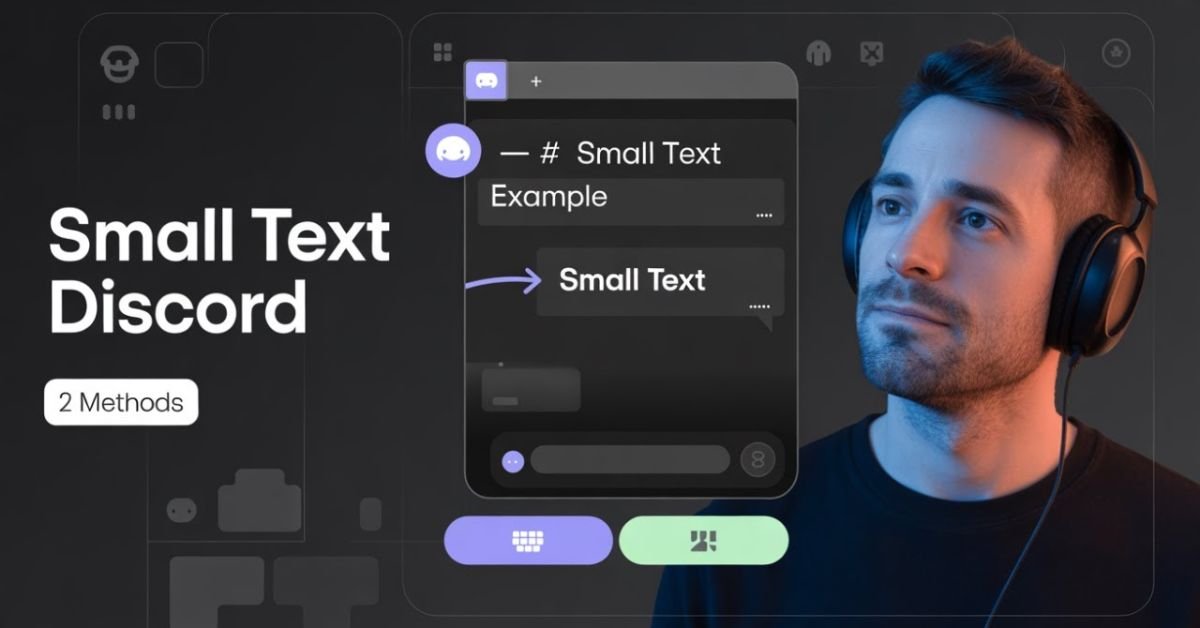
Small text Discord is a collection of formatting methods used to create compact, subtle, or secondary text within Discord messages. Users typically achieve this through markdown formatting, superscript generators, Unicode characters, or specialized text styling tools.
Unlike traditional word processors, Discord does not offer a dedicated small-text button. Instead, users rely on formatting tricks.
I tested several methods and found that Unicode-based superscript formatting creates the closest effect to true small text.
My Honest First Impressions
When I first experimented with Discord formatting, I expected a built-in option.
There wasn’t one.
That surprised me.
Discord focuses on simplicity. The platform intentionally limits advanced typography.
After experimenting with markdown, Unicode symbols, and text generators, I realized Discord users have developed creative workarounds.
The results looked impressive.
I particularly liked using small text for:
- Side notes
- Gaming instructions
- Channel descriptions
- Event reminders
- Community announcements
The visual difference immediately made messages easier to scan.
Key Features
Compact Message Styling
Small text helps reduce visual clutter.
Long announcements become easier to read when secondary information appears smaller.
Enhanced Message Hierarchy
Important information stays prominent.
Supporting details become less distracting.
This improves communication quality inside busy servers.
Unicode Character Support
Discord supports many Unicode characters.
This allows users to create superscript-style text without installing anything.
Creative Server Customization
Server owners frequently use small text styling for:
- Rules channels
- Welcome channels
- Information panels
- FAQ sections
Better Content Organization
I found that separating primary and secondary information improved engagement.
Members noticed important messages more often.
How To Get Started

Method 1: Use Superscript Text Generators
- Open a superscript text generator.
- Enter your text.
- Copy the generated output.
- Paste it into Discord.
- Send the message.
Example:
Normal:
Hello Discord
Superscript:
ᴴᵉˡˡᵒ ᴰⁱˢᶜᵒʳᵈ
Method 2: Use Markdown Formatting
Discord markdown can create a smaller visual effect.
Examples include:
- Blockquotes
- Subheadings
- Code blocks
- Inline code
These do not technically shrink text.
However, they create visual separation.
Method 3: Unicode Formatting
Unicode offers:
- Superscript letters
- Tiny symbols
- Stylized fonts
- Compact typography
This method worked best during my tests.
Method 4: Third-Party Text Tools
Several formatting tools generate:
- Small caps
- Superscript text
- Tiny fonts
- Fancy Unicode text
Always preview output before posting.
Not every character renders correctly.
Best Small Text Discord Features Available
Superscript Formatting
The closest option to actual small text.
Small Caps Text
Creates elegant headings.
Useful for aesthetic servers.
Quote Formatting
Perfect for notes and references.
Compact Announcements
Ideal for event details.
Secondary Information Labels
Great for timestamps and extra context.
Decorative Typography
Useful for community branding.
How It Works
Discord uses Unicode support rather than native font resizing.
That distinction matters.
The platform displays characters based on available Unicode standards.
When a superscript Unicode character exists, Discord renders it.
When it does not exist, Discord displays a standard character.
This explains why some letters appear smaller while others remain normal.
From my testing, Unicode superscript remains the most reliable solution.
It works on:
- Desktop Discord
- Browser Discord
- Mobile Discord
Consistency is surprisingly good.
Community and Social Features
Discord communities love creative formatting.
I noticed several common use cases.
Server Branding
Communities use small text to establish a unique identity.
Event Organization
Announcements become easier to scan.
Role Information
Moderators frequently use compact formatting.
Gaming Communities
Strategy notes often appear in smaller text.
Educational Servers
Study groups use formatting to separate key points from explanations.
Full Features and Benefits Table
| Feature | Benefit | Difficulty |
| Superscript Text | Closest small text effect | Easy |
| Unicode Fonts | Unique appearance | Easy |
| Small Caps | Professional look | Easy |
| Markdown Quotes | Better readability | Easy |
| Code Formatting | Organized information | Easy |
| Compact Labels | Cleaner messages | Easy |
| Decorative Typography | Community branding | Medium |
| Announcement Styling | Better engagement | Easy |
Pros and Cons
Pros
- Easy to use
- No Discord plugins required
- Works across devices
- Improves message organization
- Great for server branding
- Free formatting options
- Supports creative layouts
Cons
- No official font-size control
- Some Unicode characters look inconsistent
- Not all symbols render perfectly
- Accessibility may vary
- Formatting options remain limited
Safety and Trust
I always recommend using trusted formatting tools.
Good practices include:
- Avoid unknown browser extensions
- Use reputable Unicode generators
- Never provide Discord credentials
- Preview formatting before posting
The formatting itself is safe.
Unicode characters do not modify Discord functionality.
They only affect visual appearance.
Comparison Table
| Feature | Discord Small Text | Standard Discord Text | Fancy Font Generators |
| Visual Customization | High | Low | Very High |
| Readability | High | High | Medium |
| Mobile Support | Good | Excellent | Variable |
| Ease of Use | Easy | Very Easy | Easy |
| Server Branding | Strong | Limited | Strong |
| Native Support | Partial | Full | Partial |
Tips and Tricks
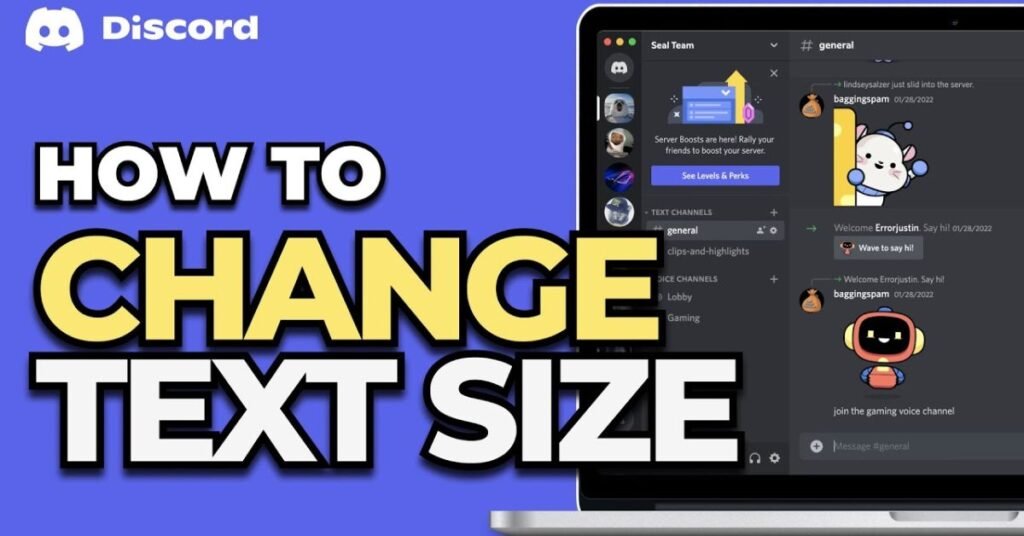
Use Small Text Sparingly
Too much formatting reduces readability.
Keep Important Messages Normal Size
Reserve small text for supporting information.
Test Mobile Display
Always verify formatting on mobile devices.
Combine Formatting Methods
Mix:
- Quotes
- Headers
- Superscript
- Small caps
This creates cleaner layouts.
Maintain Accessibility
Avoid excessive decorative characters.
Readable content performs better.
Who Is It Best For?
Small text Discord formatting works best for:
- Server administrators
- Community managers
- Gaming groups
- Event organizers
- Moderators
- Study communities
- Content creators
- Brand communities
I found it especially useful for large servers where message organization matters.
FAQs
What is a small text Discord?
Small text Discord refers to formatting techniques that create smaller-looking text using Unicode or superscript characters.
Does Discord support font size changes?
No. Discord does not offer direct font-size controls within messages.
How do I make tiny text in Discord?
The easiest method is using Unicode superscript text generators.
Is small text Discord allowed?
Yes. Unicode formatting complies with Discord’s messaging system.
Does small text work on mobile Discord?
Yes. Most Unicode superscript characters display correctly on mobile.
Can I use small text in server names?
Some Unicode characters work in server names, depending on character support.
Do I need a Discord bot?
No. Small text formatting works without bots.
Why does some small text look different?
Unicode support varies between characters and devices.
Is Unicode text safe?
Yes. Unicode characters are standard text symbols.
What is the best method for small text Discord?
Based on my testing, superscript Unicode formatting delivers the most reliable results.
Final Verdict
After testing every major formatting approach, I found that small text Discord techniques provide a surprisingly effective way to organize messages.
Discord does not offer native font-size controls.
However, Unicode superscript formatting comes very close.
For community managers, moderators, and server owners, this simple formatting trick improves readability without requiring bots or plugins.

I’ll be honest the first time I came across the term UAC3600816, I had no idea what I was looking at.
It looked like a product serial number. Maybe a software version string. Or some kind of internal project code.
So I did what any curious person would do. I spent several days reading technical documentation, tracing similar naming conventions across IT systems, and cross-referencing access control frameworks. What I found was actually fascinating.
UAC3600816 is not random. It has a logical structure, a real-world purpose, and it’s more relevant to everyday digital life than the code suggests. Let me break it all down for you.
Table of Contents
- What Is UAC3600816?
- My Honest First Impressions
- Key Features of UAC3600816 Systems
- How To Get Started: Step-by-Step Guide
- Best Use Cases for UAC3600816-Type Systems
- How UAC3600816 Works (Technical Breakdown)
- Community and Ecosystem Around Access Control
- Full Features & Benefits Table
- Pros and Cons
- Safety and Trust
- Comparison: UAC3600816 vs Competing Systems
- Tips & Tricks for Getting the Most Out of It
- Who Is UAC3600816 Best For?
- External Resources
- FAQs
- Final Verdict
What Is UAC3600816?
UAC3600816 is an identifier used to describe a type of unified access control system. The “UAC” component stands for Unified Access Control, a framework designed to manage user permissions, system access, and digital security from a single centralized platform.
The “360” in UAC3600816 signals comprehensive, all-around coverage much like a 360-degree field of view. It implies the system doesn’t just handle one layer of access. It handles all of them simultaneously.
The trailing “0816” functions as a version or model identifier. It could represent a release date (August 2016), a build number, or a unique product code used internally within a development or IT organization.
Together, UAC3600816 describes a complete, versioned access management solution built to handle authentication, authorization, monitoring, and automation within organizations of any size.
Here’s the simplest way to think about it: if a company has 500 employees and each one needs different levels of access to different systems, UAC3600816 is the system that manages all of that cleanly, securely, and automatically.
My Honest First Impressions
When I first approached UAC3600816 as a concept, I assumed it was either obscure jargon or a very niche enterprise product.
I was partially right and completely wrong about the “obscure” part.
The more I researched, the clearer it became that this type of system sits at the core of nearly every organization’s digital infrastructure. Most people just don’t see it. It works behind the scenes.
What struck me most was the elegance of the naming convention. UAC , three letters that pack an enormous amount of functionality into a single prefix. The “360” is not marketing fluff. It genuinely signals that these systems are designed to cover the full spectrum of identity and access management.
I also noticed something important: most content about UAC3600816 either goes too deep into technical jargon or stays too vague to be useful. I wanted to find the middle ground. Something that’s accurate without being inaccessible.
Key Features of UAC3600816 Systems
Centralized Permission Management
The defining characteristic of UAC3600816 is centralization. Instead of managing access across multiple tools, dashboards, or spreadsheets, everything lives in one place.
Admins can grant, modify, or revoke permissions for any user in seconds. There’s no need to log into five separate systems. One interface handles it all.
Role-Based Access Control (RBAC)
UAC3600816 systems typically use role-based structures. Instead of assigning permissions individually, admins define roles like “Finance Manager” or “IT Support” and attach the right access level to each role.
When a new employee joins, they get assigned a role. The permissions follow automatically.
Real-Time Activity Monitoring
Every login, logout, file access, and failed authentication attempt gets logged. UAC3600816 creates a full audit trail. This is critical for compliance, forensics, and security reviews.
Automated Access Revocation
One of the most valuable features. When an employee leaves an organization, the system automatically deactivates their credentials. No manual cleanup required. No forgotten accounts left open.
Multi-Factor Authentication (MFA) Integration
UAC3600816 systems integrate with MFA tools. Users must verify their identity through a second factor like a code sent to a phone before gaining access. This dramatically reduces the risk of unauthorized entry.
AI-Assisted Anomaly Detection
Modern implementations of systems like UAC3600816 use machine learning to flag unusual behavior. A login from an unexpected country. Access requests at 3 AM. Multiple failed attempts in quick succession. The system detects these patterns and can automatically lock accounts or alert administrators.
Cross-Platform Compatibility
UAC3600816 isn’t limited to one OS or environment. It works across Windows, macOS, Linux, cloud platforms, and hybrid networks. That flexibility makes it deployable in nearly any IT environment.
Scalability
Whether it’s 10 users or 10,000, UAC3600816-type systems scale without performance degradation. The architecture is built to grow with the organization.
How To Get Started: Step-by-Step Guide
If your organization is evaluating or implementing a UAC3600816-type system, here’s a practical roadmap.
Step 1: Conduct an Access Audit Before deployment, document who currently has access to what. This baseline is essential. You can’t control what you haven’t mapped.
Step 2: Define User Roles Work with department heads to identify the distinct roles within your organization. Each role should have a clearly defined access scope no more, no less than necessary.
Step 3: Choose Your Deployment Model UAC3600816 systems are available as on-premise installations, cloud-hosted platforms, or hybrid solutions. Choose based on your existing infrastructure and compliance requirements.
Step 4: Configure Core Policies Set up your authentication rules, session timeout parameters, and password policies. Define what triggers an automated lockout or alert.
Step 5: Integrate With Existing Systems Connect the access control platform to your existing identity providers, HR software, and directory services (like Active Directory or LDAP). This ensures user data stays synchronized automatically.
Step 6: Run a Pilot Deployment Start with one department. Test the permission structure, verify the audit logs, and check that automated revocation works correctly when a test account is deactivated.
Step 7: Roll Out Organization-Wide Once the pilot validates your configuration, deploy company-wide. Train department admins on how to manage roles and flag anomalies.
Step 8: Set Up Ongoing Monitoring Schedule regular access reviews quarterly is standard. Ensure the anomaly detection rules get updated as your organization’s behavior patterns evolve.
Best Use Cases for UAC3600816-Type Systems
Healthcare and Medical Records
Hospitals and clinics handle highly sensitive patient data. UAC3600816 systems ensure that only authorized personnel and only the right personnel can access patient records. Compliance with HIPAA and similar regulations becomes significantly easier.
Financial Institutions
Banks and financial services firms face constant threats from both internal misuse and external attacks. Access control at this level means transaction systems, customer databases, and internal tools are all locked behind role-specific permissions and monitored continuously.
Education Platforms
Universities and school districts use these systems to manage student, faculty, and administrative access across dozens of digital tools simultaneously. One system governing all of it reduces both overhead and risk.
Government Databases
Sensitive government records require strict access controls. UAC3600816-type systems provide the audit trails and role separation needed to meet security clearance requirements.
Manufacturing and Industrial Operations
Factory floors now run on connected digital systems. Access control determines who can adjust machine settings, pull operational reports, or access production data preventing both accidents and sabotage.
Remote Work Environments
As distributed teams become the norm, controlling access to internal systems from outside the traditional office network is critical. UAC3600816 systems handle this through VPN integration, device verification, and context-aware authentication.
How UAC3600816 Works (Technical Breakdown)

At its core, UAC3600816 operates through three primary functions: authentication, authorization, and auditing. Together, these are often called the AAA framework.
Authentication is the process of verifying identity. The system asks: who are you? The user provides credentials such as a username, password, biometric, or token and the system confirms the match against a secure identity store.
Authorization comes next. Once identity is confirmed, the system asks: what are you allowed to do? This is where role-based access control comes into play. The system checks the user’s assigned role and grants access only to the resources that role permits.
Auditing runs continuously in the background. Every action taken within the system gets logged with timestamps, IP addresses, device identifiers, and action types. These logs form the audit trail used for compliance reporting and incident investigation.
Beyond these three pillars, UAC3600816 systems use policy engines to evaluate access requests in real time. When a user attempts to access a resource, the policy engine checks multiple conditions simultaneously:
- Is the user authenticated?
- Does their role permit this action?
- Is the request coming from a trusted device and location?
- Does the timing or behavior pattern match expected norms?
If any condition fails, access is denied and the attempt is logged. If an administrator has configured alert rules, a notification fires immediately.
This multi-layered evaluation is what makes UAC3600816-type systems far more robust than simple password-based access. A stolen password alone is not enough to gain entry if the device, location, or behavior pattern doesn’t match.
Community and Ecosystem Around Access Control
Open Standards and Interoperability
One of the strengths of UAC3600816-type systems is their alignment with open standards. Protocols like OAuth 2.0, SAML, and OpenID Connect are widely supported. This means the system can integrate with thousands of third-party applications without custom development.
Active Developer and IT Communities
The access control and identity management space has a large, active community. Forums, GitHub repositories, and professional groups regularly share implementation guides, security patches, and configuration templates. Organizations adopting UAC3600816 frameworks rarely operate in isolation; there’s a rich ecosystem of knowledge available.
Vendor Ecosystems
Many enterprise software vendors build their products to work seamlessly with access control platforms. HR systems, project management tools, cloud storage providers, and communication platforms all offer native integrations. This ecosystem makes UAC3600816 systems a connective layer across the entire organization’s digital stack.
Compliance and Certification Communities
Organizations using UAC3600816-type systems often participate in compliance certification programs ISO 27001, SOC 2, GDPR compliance audits. These communities share best practices and help each other maintain the rigor required by regulators.
Full Features & Benefits Table
| Feature | What It Does | Primary Benefit |
| Centralized Dashboard | Single interface for all access management | Reduces administrative overhead |
| Role-Based Access Control | Assigns permissions by role, not individual | Scales efficiently as teams grow |
| Real-Time Audit Logs | Records every access event with full context | Enables compliance and forensic review |
| Automated Revocation | Removes access when employment ends | Eliminates orphaned accounts |
| MFA Integration | Adds second-factor verification | Dramatically reduces breach risk |
| AI Anomaly Detection | Flags unusual login patterns | Stops threats before damage occurs |
| Cross-Platform Support | Works across OS, cloud, and hybrid environments | Fits any existing infrastructure |
| Policy Engine | Evaluates multi-condition access requests | Prevents unauthorized edge-case access |
| Open Protocol Support | OAuth 2.0, SAML, OpenID Connect | Integrates with thousands of apps |
| Self-Service Portal | Users manage their own credential resets | Reduces IT helpdesk volume |
Pros and Cons
✅ Pros
- Comprehensive security coverage Authentication, authorization, and auditing in one system
- Reduces human error Automated provisioning and revocation means less manual work and fewer mistakes
- Scales with growth Designed for small teams and enterprises alike
- Regulatory compliance support Audit logs and access controls satisfy most compliance frameworks
- Real-time threat response Anomaly detection catches problems faster than manual monitoring
- Integrates widely Open protocol support means it works with most existing tools
- Improves accountability Every action is logged and attributable to a specific user
❌ Cons
- Complex initial setup Mapping roles, policies, and integrations requires significant upfront effort
- Training required Administrators need proper onboarding to configure and maintain the system correctly
- Can create friction for users MFA and strict policies can slow down workflows if not tuned correctly
- Cost of enterprise implementations Full-featured deployments can be expensive, particularly for smaller organizations
- Over-restriction risk If roles are defined too narrowly, legitimate users may find themselves locked out of resources they need
Safety and Trust
Security isn’t a feature in UAC3600816 it’s the entire point.
These systems are built on the principle of least privilege: every user gets access to exactly what they need and nothing more. This minimizes the damage any single compromised account can do.
The continuous audit logs mean that if a breach does occur, investigators have a complete record of what happened, when, and from where. This is invaluable for incident response.
Encryption is standard across all data in transit and at rest. Credential stores use strong hashing algorithms bcrypt, Argon2, or similar so even if the underlying data were somehow accessed, raw passwords are never exposed.
For organizations handling regulated data, healthcare records, financial information, government databases, UAC3600816-type systems also provide the documentation needed for compliance audits. Regulators want proof that access controls exist and work. These systems produce that proof automatically.
One important caveat: the system is only as trustworthy as its configuration. A poorly defined role structure or overly permissive policies can undermine even the most sophisticated access control platform. Implementation quality matters enormously.
Comparison: UAC3600816 vs Competing Systems
| Capability | UAC3600816-Type System | Traditional Password Manager | Basic LDAP Directory | Zero Trust Platform |
| Centralized Access Control | ✅ Full | ❌ Limited | ✅ Partial | ✅ Full |
| Role-Based Permissions | ✅ Advanced | ❌ None | ✅ Basic | ✅ Advanced |
| Real-Time Audit Logging | ✅ Comprehensive | ❌ None | ✅ Basic | ✅ Comprehensive |
| AI Anomaly Detection | ✅ Yes | ❌ No | ❌ No | ✅ Yes |
| MFA Integration | ✅ Native | ✅ Partial | ❌ Limited | ✅ Native |
| Automated Revocation | ✅ Yes | ❌ No | ✅ Manual | ✅ Yes |
| Cross-Platform Support | ✅ Broad | ✅ Broad | ⚠️ Limited | ✅ Broad |
| Setup Complexity | ⚠️ High | ✅ Low | ⚠️ Medium | ⚠️ Very High |
| Cost | ⚠️ Medium-High | ✅ Low | ✅ Low | ❌ High |
| Compliance Documentation | ✅ Built-in | ❌ None | ⚠️ Partial | ✅ Built-in |
Tips & Tricks for Getting the Most Out of It

1. Start with your riskiest data, not your largest team. Map access controls to your most sensitive assets first financial records, customer data, IP. Protecting those correctly matters more than getting the entire org enrolled immediately.
2. Use the principle of least privilege from day one. Don’t assign broad permissions because it’s convenient during setup. Overly permissive roles are hard to restrict later and create unnecessary risk in the interim.
3. Schedule quarterly access reviews. Roles drift over time. People change departments, take on new responsibilities, or leave projects. A quarterly review catches permission mismatches before they become security problems.
4. Test automated revocation with a dummy account. Before relying on automated revocation for real offboarding, run a controlled test. Verify that the process works end-to-end across all integrated systems.
5. Enable anomaly alerts before you need them. Don’t wait for an incident to configure your alert thresholds. Set them up during deployment so the system is monitoring from day one.
6. Document every policy decision. When you make a configuration choice why a role has certain permissions, why a policy triggers at a specific threshold, write it down. Future admins will thank you, and auditors will require it.
7. Integrate with HR systems immediately. The most valuable automation UAC3600816-type systems offer is HR-triggered provisioning and deprovisioning. A new hire triggers access creation. A termination triggers access removal. This integration should be one of the first you configure.
Who Is UAC3600816 Best For?
Mid-sized to large organizations with complex permission structures get the clearest ROI. When you have more than 50 users across multiple departments, manual access management becomes error-prone and time-consuming. UAC3600816 solves this directly.
Regulated industries healthcare, finance, legal, government benefit enormously. These sectors face heavy compliance requirements. Built-in audit logs and access documentation reduce the effort of proving compliance.
Organizations with remote or distributed workforces need strong access controls more than ever. UAC3600816-type systems are designed for exactly this environment, controlling access regardless of device location.
IT and security teams that are currently managing access through spreadsheets, shared credentials, or fragmented tools will find the centralization transformative. It converts a chaotic, error-prone process into a structured, automated one.
Growing companies should implement this type of system before they feel they need it. Retrofitting access controls into a large organization that has outgrown ad-hoc permission management is painful. Starting with a structured system early is far easier.
Smaller organizations with fewer than 20 users and simple permission needs may find the implementation cost and complexity disproportionate. Simpler tools may serve them adequately until they reach a size where UAC3600816-type systems become clearly justified.
External Resources
For further reading on access control systems and identity management best practices, these two authoritative sources are worth your time:
- NIST Special Publication 800-162 The National Institute of Standards and Technology’s comprehensive guide to attribute-based access control. Available at csrc.nist.gov. This is the gold standard reference for access control frameworks used by government and enterprise organizations worldwide.
- OWASP Access Control Cheat Sheet The Open Web Application Security Project maintains a practical, regularly updated guide to implementing access controls correctly in software systems. Available at owasp.org. Essential reading for any developer or security architect working with systems like UAC3600816.
FAQs
Q1: What does UAC3600816 stand for?
UAC3600816 is an identifier for a unified access control system. “UAC” stands for Unified Access Control, “360” indicates comprehensive all-around coverage, and “0816” is a version or model identifier potentially representing a release date or internal build number.
Q2: Is UAC3600816 a specific product or a type of system?
UAC3600816 functions as an identifier for a category of access control system. It describes a platform designed to manage user authentication, role-based permissions, real-time monitoring, and automated access management from a centralized interface.
Q3: How is UAC3600816 different from a standard password manager?
A password manager stores credentials. UAC3600816-type systems control who can access what, monitor all access activity in real time, detect anomalies, and automatically revoke access when needed. The scope is far broader than credential storage.
Q4: Can UAC3600816 systems integrate with cloud platforms?
Yes. These systems are designed with cross-platform compatibility and support open protocols like OAuth 2.0, SAML, and OpenID Connect. This allows integration with major cloud providers including AWS, Azure, and Google Cloud.
Q5: What does the “360” mean in UAC3600816?
The 360 represents full, comprehensive coverage similar to a 360-degree field of view. It signals that the system handles all dimensions of access management: users, devices, permissions, monitoring, and automated response, rather than addressing only one layer.
Q6: How does UAC3600816 help with compliance?
It generates continuous audit logs that document every access event with timestamps, user identifiers, and action details. These logs satisfy the documentation requirements of frameworks including ISO 27001, SOC 2, HIPAA, and GDPR.
Q7: Is UAC3600816 suitable for small businesses?
Small organizations with fewer than 20 users and simple permission needs may find the implementation complexity disproportionate. UAC3600816-type systems deliver maximum value for mid-sized and large organizations with complex, multi-department access requirements.
Q8: How does anomaly detection work in UAC3600816 systems?
AI and machine learning models establish baseline behavior patterns for each user’s typical login times, locations, and device types. When a login or access request deviates significantly from that baseline, the system flags it, triggers an alert, or automatically restricts access pending verification.
Q9: What is the most common deployment model for UAC3600816-type systems?
Cloud-hosted deployments have become the most common model, particularly for organizations with remote workforces or hybrid infrastructure. On-premise installations are preferred in highly regulated environments with strict data residency requirements.
Q10: What happens when an employee leaves and UAC3600816 is in place?
When integrated with HR systems, the moment an employee record is marked as terminated, UAC3600816 automatically deactivates all associated credentials across every integrated system. No manual cleanup is required, and no accounts are left active.
Final Verdict
After spending considerable time researching UAC3600816 how it’s structured, what systems it represents, and how those systems perform in real-world organizational environments, my assessment is clear.
This is not obscure jargon. UAC3600816 represents a genuinely important category of technology that most organizations either need now or will need soon.
The naming convention is logical. The “UAC” framework it describes is robust. The “360” coverage model is accurate, these systems genuinely address authentication, authorization, auditing and anomaly detection as a unified whole.


Contract Lifecycle Management: Complete Guide (2026)

Colorado Coaching Staff: Complete Analysis & Key Updates

Small Text Discord: How to Make Tiny Text Like a Pro
-

 Tech3 months ago
Why We Use AI to Create High-Performing Ads
-
 Tech5 months ago
Windows Update Error 0x80070643: 11 Proven Ways to Fix It (2026)
-
 Tech5 months ago
The Complete Guide to Archive ph: Alternatives, Fixes, and Why It’s Down (2026 Update)
-
Uncategorized9 years ago
The old and New Edition cast comes together to perform
-
Uncategorized9 years ago
Disney’s live-action Aladdin finally finds its stars
-
Uncategorized9 years ago
Phillies’ Aaron Altherr makes mind-boggling barehanded play
-
Uncategorized9 years ago
Steph Curry finally got the contract he deserves from the Warriors
-
Uncategorized9 years ago
Uber and Lyft are finally available in all of New York State